Shannon's death
Bird BoxShannon's death is the first decisive personal loss in Malorie’s account of the catastrophe: it transforms warnings about a danger outside the home into an immediate reality, and leaves Malorie facing both grief and the fear that the house is no longer secure.
The household before the discovery
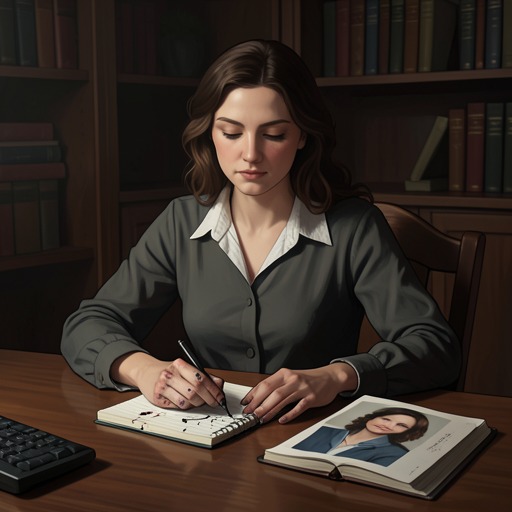
Malorie is alone in the living room, watching television while rubbing her belly and worrying that the baby will share her anxiety. A computer is open on a desk, and the radio plays softly, surrounding her with a continuous flow of alarming news. The broadcasts have changed: there are no commercials, and newscasters pause as fresh developments reach them. The media’s unsettled presence makes the room feel like a war room, while the baby’s impending arrival makes the accumulating danger intimate rather than abstract.
Above the television and radio, Malorie hears Shannon moving upstairs. Then a thud interrupts the noise. Malorie calls out to ask whether Shannon is all right. The moment turns the distant emergency into a household alarm, but the source of the sound is not yet clear.
The discovery upstairs
Malorie climbs the stairs and calls for Shannon again. At the top, she sees sunlight coming through Shannon’s bedroom: one corner of the window is exposed, and part of the blanket used as a covering has come loose. She looks away rather than inspect the room further. The breach establishes a concrete vulnerability in the home’s defenses, though the scene does not show what Shannon saw or explain exactly how the covering came undone.
The bathroom door is open and its light is on. Malorie approaches, pauses, and looks inside. Shannon is on the floor, dead, with a pair of scissors in her chest. Malorie’s scream gives way to collapse and grief. The discovery is presented through her immediate response, making Shannon’s death not a report from the wider crisis but a rupture within the family.
Grief and recognition
Malorie crawls to the bathtub and vomits. Her sister’s blood is on her, and she tries to wake Shannon despite knowing she cannot. She then tells Shannon she is going to get help. The movement from attempting to rouse her sister to promising to summon assistance marks the first effort to act after the shock of the discovery.
Downstairs, Malorie calls the police, but no one answers. She tries her parents and receives no answer there either. She runs to the front door, intending to seek help in person, but cannot turn the doorknob. The unanswered calls and her inability to leave make the house feel cut off from the ordinary systems of rescue. Her grief now has to contend with a danger that may be just beyond the door.
The threat beyond the door
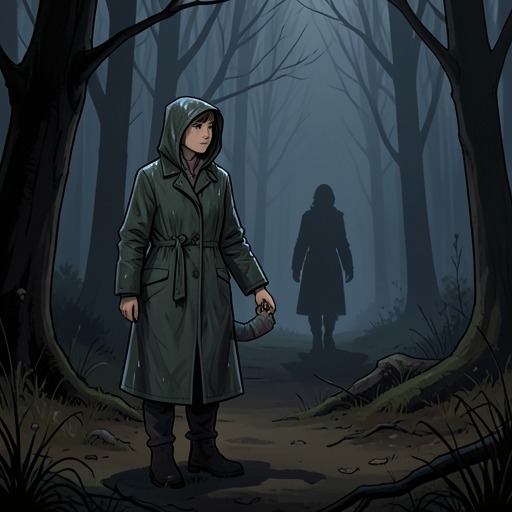
Malorie concludes that Shannon would not have chosen to die willingly and recognizes that something is outside. She further understands that whatever Shannon saw must be close to the house. The distinction matters: the death does not reveal the creature’s appearance or establish precisely what happened in the bedroom, but it changes Malorie’s understanding of the danger from a troubling possibility into a nearby presence with lethal consequences.
A piece of wood separates Malorie from the outside. Beyond it, she hears wind, but no cars or neighbors. The stillness contrasts with the busy, increasingly distressed broadcasts that filled the living room. The sequence ends not with escape or explanation but with Malorie unable to open the door, alone inside the house with the knowledge that her sister is dead and the threat may be close.